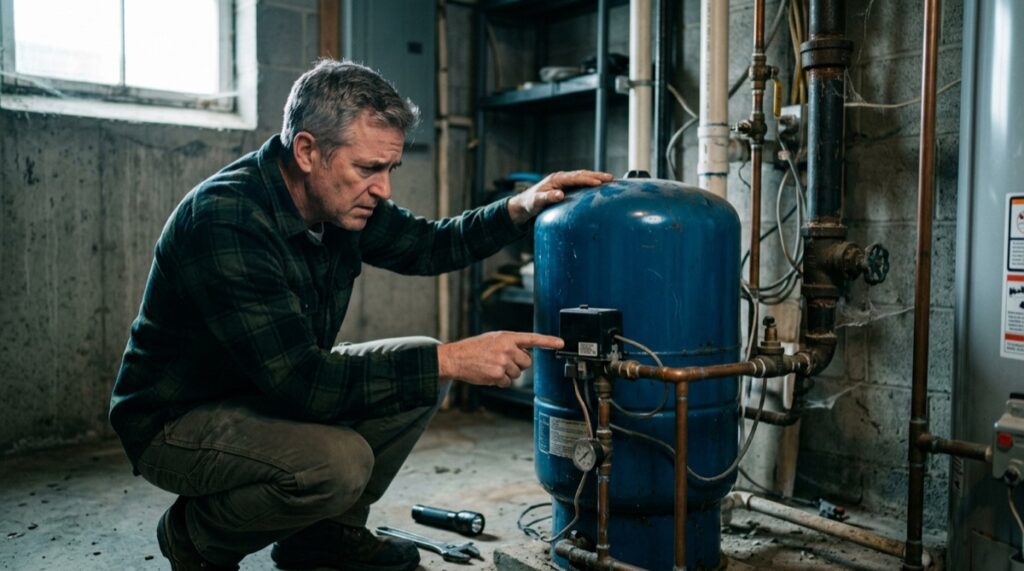
A well pump usually gives clear warnings before it fails completely. The most reliable signs a well pump is failing are changing water pressure, continuous running, rapid cycling, air at the faucets, rising electricity use, sediment in the water, and new mechanical or electrical noises.
Recognizing these warnings early can help you avoid an emergency loss of water, a burned-out motor, damaged plumbing, or flooding from a failed pipe or fitting. One caution matters: these symptoms do not always mean the pump itself has failed. The pressure tank, pressure switch, underground water line, electrical controls, or well may be responsible.
The pattern tells you more than any single symptom. Note when the problem happens, which fixtures are affected, how long the pump runs, and what the pressure gauge does. Those details help a well technician distinguish a worn pump from a different system problem.
1. Fluctuating or dropping water pressure
Pressure that rises and falls during a shower is one of the most common signs a well pump is failing, but it is also one of the easiest symptoms to misdiagnose. A conventional well system normally operates across a pressure range. For example, the pump may start when system pressure reaches 40 pounds per square inch and stop at 60. A modest change within that range is expected. A sharp surge followed by a weak stream is not.
What is happening mechanically: The pump may no longer move enough water to rebuild pressure at the rate the house is using it. Worn impellers, the rotating parts that push water through the pump, can lose performance after years of contact with sand or mineral deposits. A partially blocked pump intake can create a similar result.
Pressure can also fall when the pumping water level drops. This is the water level while the pump is operating, which can be much lower than the resting level. If the well cannot recover as fast as the pump draws water, pressure may begin normally and fade during a bath, irrigation cycle, or several loads of laundry.
Likely components: The pump and intake screen are possible causes, but so are a clogged sediment filter, restricted treatment equipment, a failing pressure regulator, a leaking underground line, or an inaccurate pressure gauge. If only one faucet is weak, suspect that fixture or its supply pipe before blaming the well pump.
Urgency: Arrange service within days if pressure is steadily worsening or drops throughout the house. Treat it as an immediate problem if the pump runs without rebuilding pressure, water stops entirely, or the pressure gauge falls while nobody is using water. Those patterns can indicate a major leak or a pump running without adequate water.
Safe homeowner check: Compare several fixtures, including one that bypasses water-treatment equipment if your plumbing has such a tap. Note the pressure gauge before, during, and after water use without opening any electrical enclosure. Check whether a cartridge filter is overdue for replacement. Record whether the problem appears only during heavy demand.
2. The pump runs continuously or will not shut off
A conventional pump should stop after it fills the pressure tank and reaches the pressure switch’s upper setting. If it continues running after every faucet and water-using appliance is off, the system is either losing water or failing to reach shutoff pressure.
What is happening mechanically: A worn pump may still move water but no longer produce enough pressure to satisfy the switch. A low water level can reduce delivery for the same reason. The pump keeps working toward a pressure it cannot reach, which generates heat and accelerates wear.
A split underground service line, leaking drop pipe inside the well, failed check valve, or running toilet can also keep pressure below the shutoff point. The check valve is a one-way valve intended to prevent pumped water from draining back toward the well. A damaged pressure switch or blocked sensing passage may fail to recognize that pressure has risen.
Likely components: Common suspects include the pump, pressure switch, check valve, drop pipe, buried line to the house, and the well’s available water supply. A constant-pressure system is different: it may run at reduced speed while water is being used. It should still stop once demand ends.
Urgency: Immediate. A pump that will not stop can overheat, run dry, waste electricity, or turn a modest leak into major water damage. If you know which breaker supplies the pump and can reach it without entering a wet area, shutting off that breaker can protect the equipment while you call for service. Be aware that this also stops the home’s water supply.
Safe homeowner check: Confirm that faucets, toilets, irrigation valves, humidifiers, livestock waterers, and treatment systems are not drawing water. Look for wet soil between the well and house and listen for water moving near the pressure tank. Do not adjust the pressure switch or remove its cover.
3. Short-cycling: rapid on-off-on-off operation
Short-cycling means the pump starts and stops far more often than the system was designed to allow. You may hear the pressure switch click repeatedly while a faucet is open. In a severe case, the pump runs for only a few seconds before stopping, then starts again almost at once.
What is happening mechanically: The pressure tank normally stores a usable volume of pressurized water. This stored water supplies the house between pump cycles. If the tank loses its air charge or its internal bladder ruptures, it holds very little usable water. Opening a faucet then drops pressure almost immediately, starts the pump, and raises pressure just as rapidly because there is no proper air cushion.
Each motor start produces heat and a strong electrical load. A pump may tolerate long running periods better than hundreds of closely spaced starts. Short-cycling can damage the motor, pressure switch contacts, starting capacitor, and control equipment even when the pump was healthy before the cycling began.
Likely components: The pressure tank is the leading suspect. Other causes include an incorrectly set tank air charge, a defective pressure switch, an undersized tank, a leaking check valve, or a small plumbing leak that repeatedly lowers pressure.
Urgency: Service should be arranged within days when cycling is noticeably more frequent. If the pump is starting every few seconds, stop heavy water use and seek same-day service. Continued operation can turn a pressure-tank repair into a pump replacement.
Safe homeowner check: Watch the pressure gauge while one faucet runs at a moderate rate. Time each run and rest period. A video that captures the gauge and switching sound can help the technician. You can also look for water at the tank’s air valve, which may suggest a ruptured bladder, but do not press the valve or attempt to recharge the tank unless you understand the manufacturer’s procedure and have isolated and drained the system correctly.
4. Air sputters from the faucets
A brief burst of air after plumbing work or a filter change can be trapped air leaving the pipes. Repeated sputtering at several fixtures is different. The pump may be drawing air, or air may be entering a suction line.
What is happening mechanically: A submersible pump must remain underwater. During drought, heavy irrigation, or a decline in well yield, the water level can fall near the pump intake. The pump then pulls a mixture of air and water. This often produces surging pressure and may keep the pump from filling the pressure tank.
On an above-ground jet pump, a loose fitting, damaged suction pipe, failed foot valve, or worn shaft seal can admit air without leaking much water outward. The pump may lose its prime, meaning the pump body and suction pipe no longer contain the water needed to lift water from the well.
A cracked drop pipe can produce a similar symptom in a submersible system. Less commonly, naturally occurring gases may come out of the groundwater. Odour, oily residue, or persistent gas deserves professional water-quality investigation rather than assumptions about the pump.
Likely components: Possible causes include the pump intake position, low well yield, jet-pump suction piping, foot valve, drop pipe, check valve, or a plumbing connection disturbed during recent work.
Urgency: Arrange service within days for persistent air. Seek same-day help if air appears with loss of pressure, sand, prolonged pump operation, or periods of no water. A pump that is repeatedly exposed above the water level can overheat.
Safe homeowner check: Test a non-aerated faucet, such as a bathtub spout or outdoor tap. Note whether the symptom appears throughout the house and whether it follows irrigation, laundry, or other sustained use. Reduce major water demand and allow the well time to recover. Do not repeatedly restart a pump that has stopped delivering water.
5. An unexplained increase in the electric bill
A residential well pump can add noticeable electricity use when it runs much longer or starts far more often than before. The bill alone cannot diagnose a pump, but it can confirm that a pressure or water-delivery problem is consuming energy.
What is happening mechanically: Worn impellers, low voltage, a dropping water level, a pipe leak, or a restricted intake can force the pump to run longer for each gallon delivered. A waterlogged pressure tank may create many extra starts. A failed check valve can let pressurized water drain backward, causing the pump to restart when the household is asleep and no fixtures are open.
Likely components: The pump motor may be losing efficiency, although pressure tank trouble, hidden leaks, controls, and changes in household demand are at least as important to investigate. Electric water heating, space heating, air conditioning, irrigation, and utility rate changes can overwhelm the pump’s contribution, so compare energy use with the same season from the previous year.
Urgency: Investigate within one or two weeks if the pump otherwise behaves normally. Move the call forward if the increase accompanies continuous running, rapid cycling, hot or buzzing controls, or worsening pressure.
Safe homeowner check: Record the pressure gauge and listen near the tank when no water should be in use. If the pump starts during a quiet overnight period, close known water-using appliances one at a time and note the pattern. Do not use a clamp meter, test voltage, or handle pump wiring yourself.
6. Sediment, sand, or newly discolored water
Grit in a toilet tank, sand in an aerator, or sudden cloudy water can signal a problem at the well rather than an ordinary household filter issue. Sand is especially damaging because it acts as an abrasive inside the pump.
What is happening mechanically: A pump set too close to the bottom may draw material that settles in the well. An oversized pump can pull water toward the intake faster than the surrounding formation supplies it, carrying fine particles with the flow. A damaged well screen or corroded casing can admit larger amounts of sand. Falling groundwater may also change where water enters the well.
As sand passes through the pump, it wears the impellers and internal clearances. The pump gradually loses flow and pressure. Sediment can then clog fixture aerators, valves, water heaters, treatment equipment, and appliances.
Brown, orange, or black water does not automatically condemn the pump. Iron, manganese, disturbed mineral deposits, corrosion, and water-treatment problems can change water colour. A sudden change after flooding, well work, or damage to the well cap raises a separate contamination concern.
Likely components: The investigation may involve the pump setting, pump size, well screen, casing, intake, drop pipe, and sediment filtration. The well itself may need rehabilitation even if the pump still operates.
Urgency: Arrange professional assessment within days. Stop using the water for drinking and food preparation until sudden or unexplained quality changes have been tested. Heavy sand, rapid pressure loss, or sediment appearing immediately after every pump cycle warrants same-day attention.
Safe homeowner check: Fill a clear container from a cold-water tap before treatment equipment, if an accessible sampling tap exists. Let it stand and photograph what settles. Check several fixtures to rule out a single corroded faucet. Do not remove the well cap, lift the pump, or attempt to flush the well by running large volumes of water without knowing the cause.
7. Unusual clicking, grinding, or humming noises
Noise can identify the part of the system under stress. First determine where it comes from. A submersible pump sits underground and is usually hard to hear inside the home. Sounds near the pressure tank or control box often come from the switch, relay, or piping rather than the pump motor itself.
Repeated clicking from a pressure switch or relay
One click when the pump starts and another when it stops is normal on many conventional systems. Rapid clicking points to short-cycling, unstable pressure, burned switch contacts, a blocked pressure-sensing passage, or an electrical control that cannot hold the motor circuit closed.
Urgency: Arrange prompt service, with same-day attention if the clicking repeats every few seconds or the pump does not start reliably. The homeowner check is limited to observing the pressure gauge and recording the sound from a safe distance.
Grinding or scraping from an above-ground jet pump
Grinding may indicate worn motor bearings, debris in the impeller, internal contact between moving parts, or cavitation. Cavitation occurs when inadequate water reaches the pump and vapour pockets form and collapse inside it. It can sound like gravel moving through the casing.
Urgency: Stop the pump and request same-day service. Continued operation can damage the shaft, seal, motor, or pump housing. Check only for visible leaks and blocked ventilation around the motor. Keep hands, clothing, and tools away from moving or hot equipment.
Humming without the pump running
A motor that hums but does not turn may have a seized shaft, jammed pump, failed starting capacitor, low voltage, damaged control box, or locked rotor. A locked rotor means electricity is reaching the motor but the rotating assembly cannot move. Current rises sharply, and the motor can overheat.
Urgency: Immediate. Turn off the pump circuit if you can do so from a dry, clearly labelled breaker panel. Do not keep resetting a breaker or pressing a reset button. Repeated attempts can damage equipment and conceal a serious electrical fault.
Symptom, likely cause, and urgency at a glance
| Symptom | Most likely component or condition | Urgency | Safe homeowner check |
|---|---|---|---|
| Pressure gradually drops during heavy use | Low well yield, worn pump, restricted intake, clogged filter | Within days | Compare fixtures and note gauge readings during demand |
| Pump runs after all water use stops | Leak, worn pump, low water level, pressure switch | Immediate | Confirm fixtures and irrigation are off; look for wet ground |
| Pump starts every few seconds | Waterlogged pressure tank, failed bladder, switch problem | Same day | Time cycles and record the gauge |
| Air at several faucets | Low water level, suction leak, cracked drop pipe | Days; same day if water stops | Test a non-aerated tap and reduce heavy water demand |
| Higher electricity use with longer pump runs | Leak, worn pump, low yield, cycling problem | Within one or two weeks | Compare seasonal usage and listen during no-use periods |
| Sand or grit throughout the house | Well screen, pump setting, oversized pump, casing damage | Within days | Collect a clear-container sample and photograph settling material |
| Humming without water delivery | Seized pump, failed capacitor or control, low voltage | Immediate | Switch off the labelled circuit; do not open equipment |
How long well pumps typically last
Pump age helps frame a repair decision, but it does not diagnose the failure. A 12-year-old pump with a failed control part may still have useful life. A three-year-old pump can be badly damaged by sand, poor electrical supply, dry running, or severe short-cycling.
The following figures are planning ranges rather than guaranteed service lives. Installation quality, well chemistry, motor starts, pump sizing, water level, lightning, and maintenance can move the result well outside the range.
| Pump type | Typical lifespan | Factors that shorten it | Installed quote question |
|---|---|---|---|
| Submersible pump | 8–15 years | Sand, low water, rapid cycling, voltage problems, poor sizing | Does the quote itemize pump and motor, removal, pipe and cable, controls, labour, testing, travel, taxes and exclusions? |
| Jet pump | 4–8 years | Loss of prime, suction leaks, freezing, heat, bearing or seal wear | Does the quote identify pump, piping, valves, electrical work, labour, testing, site work, taxes and exclusions? |
| Constant-pressure system | 10–15 years | Electrical surges, controller heat, poor setup, sand, low well yield | Does the quote name the pump, motor, controller, sensor, tank, wiring, setup, testing, warranty and exclusions? |
Request a written quote in USD for a U.S. project or CAD for a Canadian project. Ask each provider to itemize diagnosis, pump-only and complete installed scope, depth assumptions, equipment, pipe, electrical work, access, travel, after-hours work, taxes, quote date, validity period, exclusions, and change responsibilities. See the well pump replacement quote-planning guide for more comparison questions.
When to repair the pump and when to replace more of the system
A technician should test the system before pulling a submersible pump. Ask whether removing and reinstalling pipe and cable are separate parts of the written scope. You want evidence that the down-well pump is responsible before that work begins.
Repair is often reasonable when the pump is relatively young, the well still produces adequate water, and testing identifies an accessible component. Pressure switches, gauges, control-box capacitors, check valves, leaking fittings, filters, and pressure tanks can all imitate pump failure. Replacing the failed external part may restore normal operation without disturbing the pump.
Pump replacement becomes more persuasive when electrical tests show damaged motor windings, the pump cannot produce its rated flow or pressure, internal parts are badly worn by sand, or the pump has failed near the end of its expected service life. Parts availability also matters for older jet pumps and proprietary constant-pressure equipment.
Replacing additional system components may be prudent when the pump must already be pulled and the drop pipe, electrical cable, safety cable, check valve, or pitless adapter shows wear. The pitless adapter is the sealed fitting that carries water through the well casing below the frost line. Ask the provider to document the condition, proposed reuse or replacement, and approval process in the written scope.
The pressure tank should be tested rather than replaced by habit. If its bladder holds air, the tank is correctly sized, and the shell is sound, it may remain in service. A leaking, waterlogged, badly corroded, or undersized tank should be addressed because it can damage the replacement pump through excessive cycling.
A new pump does not correct a failing well. If testing finds inadequate well yield, casing damage, a deteriorated screen, contamination, or heavy sand production, the plan may need well rehabilitation, a storage system, a lower pumping rate, or well replacement. Those decisions require water-level, flow, and water-quality evidence.
What a well pump replacement involves
The service begins with diagnosis. The technician checks household demand, pressure behaviour, tank condition, controls, voltage, motor resistance, and water delivery. Available well records can show the well depth, pump setting, original yield, casing construction, and installed equipment.
For a submersible pump, power is disconnected and the wellhead is opened under sanitary working conditions. The crew lifts the pump, drop pipe, and cable from the well. Deep pumps or steel pipe may require a hoist or pulling machine. The removed assembly is inspected for split pipe, worn wire, failed check valves, mineral buildup, and sand damage.
The replacement pump is selected from the home’s peak water demand and the well’s actual capability. Horsepower alone is not a sizing method. The technician also considers the pumping water level, total lift, pipe friction, required pressure, flow rate, wire size, and available electrical supply.
The new or approved reusable components are lowered into the well and secured. The pressure tank and switch settings are matched to the pump. The system is then run through several cycles while the technician checks pressure, flow, electrical load, leaks, air, and sediment.
Opening a well can introduce contamination, so disinfection and water testing may be required by local rules or advisable after the work. Permit and notification requirements differ among U.S. states, Canadian provinces, and local health authorities. Keep the final invoice and updated pump details with the well record; the pump model, setting depth, wire size, and test results will matter during future service.
Sources and methodology
This article treats each warning sign as evidence for diagnosis rather than proof that one component has failed. The mechanical explanations and urgency levels were developed by comparing manufacturer troubleshooting guidance with government and well-owner references from both the United States and Canada.
- Massachusetts Department of Environmental Protection: Information for Private Well Owners During a Drought, used for the relationship among falling water levels, air, sediment, pressure loss, and extended pump operation.
- Agriculture and Agri-Food Canada: Farm Water Well Management, used for well yield, overpumping, sand entry, screen deterioration, and pump wear.
- Lake County, Illinois Health Department: Water Wells FAQs, used for pressure-tank cycling and its effect on submersible pump life.
- Pentair/Simer submersible pump installation and troubleshooting manual, used to cross-check low-output, continuous-running, water-level, control, and electrical fault patterns.
- National Ground Water Association Well Owners Guide, used for system layout, pump selection, pressure tanks, maintenance, and qualified-contractor guidance.
Lifespan figures are broad planning ranges assembled for homeowner budgeting. They are not warranties, contractor quotes, or predictions for a particular well. Urgency ratings reflect the risk of motor damage, dry running, electrical overheating, flooding, or a sudden loss of household water.