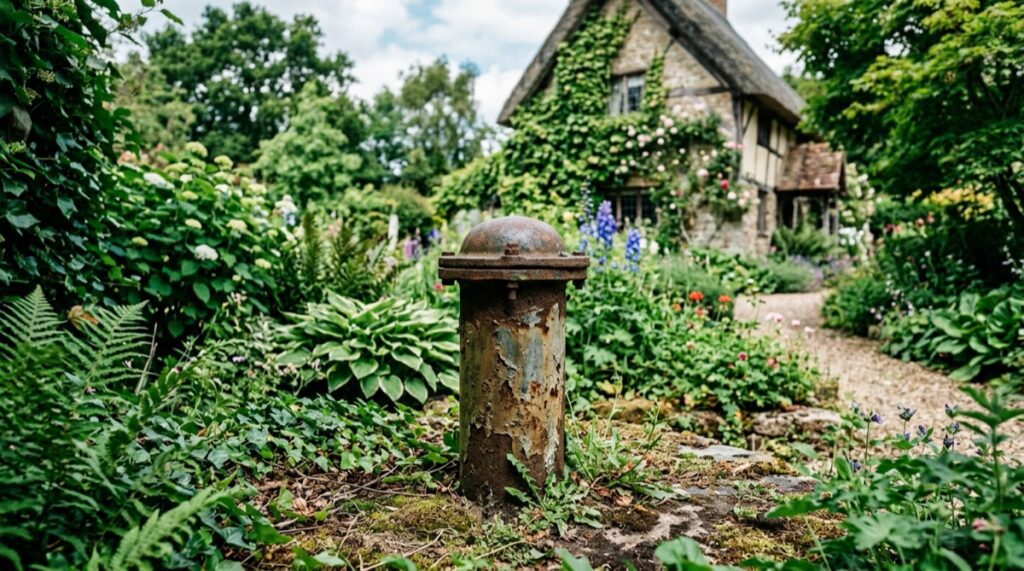
How long does a well last? For a properly constructed drilled well, a reasonable planning range is 25 to 50 years or longer. Some wells remain productive for more than a century.
But that answer covers only the well itself—the drilled opening, casing, grout and intake. The equipment that brings water into your home does not share the same lifespan. A submersible pump commonly lasts 8 to 15 years, while a bladder-style pressure tank often lasts 10 to 15 years. Both may be replaced several times before the well is retired.
The calendar matters less than three underlying conditions: how the well was constructed, what is in the water and how the system has been operated and maintained. A 40-year-old well with sound casing and stable performance may have decades left. A much newer well can develop serious problems if its casing corrodes, its grout seal fails or it continually draws sand.
Typical well-system lifespans at a glance
The following ranges describe component lifespans. They are not warranties. For eventual work, request property-specific amounts in USD for a U.S. project or CAD for a Canadian project and ask what equipment, labour, access, testing, taxes and exclusions are included.
| Component | Typical lifespan | What commonly shortens it | Itemized quote question | Signs of trouble |
|---|---|---|---|---|
| Drilled well and casing | 25–50+ years; some exceed 100 | Corrosion, poor grout, unstable ground, mineral or biological plugging | Does the quote distinguish assessment, rehabilitation and replacement drilling, and separate borehole work from a complete installation? | Falling yield, recurring sediment, repeated bacterial results, damaged casing |
| Submersible pump | 8–15 years | Sand, acidic water, frequent starts, poor sizing, voltage problems, dry running | Are pump model and capacity, setting depth, removal, pipe, cable, controls, labour, testing, travel and disposal included? | Weak flow, long run times, breaker trips, rising electricity use |
| Jet pump | 4–8 years in many household installations; protected indoor units may last longer | Moisture, freezing, heat, loss of prime, abrasive water, poor ventilation | Are pump model, existing piping and controls, priming work, labour, testing, travel, taxes and exclusions included? | Loss of prime, overheating, noisy bearings, weak or uneven pressure |
| Bladder pressure tank | 10–15 years | Bladder failure, corrosion, incorrect air charge, undersizing | Are tank model and size, tank tee, valves, controls, removal, plumbing, labour, testing and disposal included? | Rapid cycling, pressure swings, water hammer, corrosion or leaks |
| Pressure switch | 5–10 years | Burned contacts, moisture, mineral blockage, excessive cycling | Are switch compatibility, fittings, gauge, wiring, labour, testing, travel and taxes included? | Delayed starts, chattering, failure to start or stop |
| Check valve | 5–10 years | Sediment, corrosion, repeated slamming, worn internal parts | Does the quote identify the valve location, access or pump-pulling work, pipe and cable handling, labour and testing? | Pressure falls with no water use, pump restarts unexpectedly |
| Well cap and sanitary seal | Potentially the life of the well | Impact, UV exposure, loose hardware, damaged vent screens | Are the cap or seal model, fasteners, vent parts, labour, fit inspection and completion testing included? | Gaps, cracks, missing bolts, insects or debris inside |
| Pitless adapter | 20+ years | Corrosion, movement, damaged seals, poor installation | Are adapter and fitting details, excavation or access, sealing, labour, testing, restoration and exclusions included? | Leakage near the casing, loss of pressure, wet ground |
Compare local written quotes using the same currency and scope. Ask each provider to state access and excavation assumptions, treatment and electrical exclusions, after-hours work, taxes, quote date, validity period and change responsibilities.
The well itself can outlast several generations of equipment
When a well technician talks about the age of a well, we usually mean the physical water-producing structure: the drilled opening, casing, screen where one is used, grout and connection to the aquifer. The aquifer is the underground body of water-bearing rock, sand or gravel that supplies the well.
A properly drilled and cased household well commonly remains useful for 25 to 50 years or longer. Wells that were well located, correctly sealed and built with materials suited to the local geology can remain in service for 100 years or more.
Age alone does not tell you whether an old well is sound. Its condition is better judged through water-quality records, flow testing, inspection of the visible casing and cap, and—when there is reason for concern—a downhole camera inspection. A 60-year-old well with stable flow and an intact sanitary seal may be more dependable than a poorly constructed 12-year-old well.
PVC and steel casing age differently
Steel casing has high structural strength and can tolerate installation conditions that would damage some plastic casing. That makes steel necessary or preferable in many formations and drilling applications. Its weakness is corrosion. Acidic water, dissolved salts, oxygen and corrosive soil can gradually pit or thin carbon-steel casing. Advanced corrosion can allow sediment or shallow water to enter the well.
PVC casing does not rust and performs well in many corrosive environments. It is not suitable for every well, however. Depth, ground pressure, installation method, local geology and state or provincial construction rules determine whether PVC can be used. A licensed well contractor in the United States—or a properly licensed/licenced contractor under the applicable Canadian provincial rules—should select the casing rather than treating PVC and steel as interchangeable materials.
Grout protects more than the casing
Grout is the sealing material placed between the outside of the casing and the drilled hole. Think of it as a permanent barrier that prevents rainwater, snowmelt, bacteria and contaminated shallow groundwater from travelling down the casing into the water-bearing formation.
A poor grout job may not announce itself immediately. The well can produce clear water for years before recurring bacteria, cloudiness after storms or contamination from nearby activity reveals the problem. Repairing a defective seal can be difficult because the affected area is underground and may extend many feet below the surface.
What can shorten the well’s productive life?
- Aggressive water chemistry: Low-pH or salty water can corrode steel casing, screens, pumps and metal fittings.
- Mineral deposits: Iron, manganese and calcium compounds can accumulate around a screen or in fractures that admit water.
- Biological growth: Iron-related bacteria and other organisms can create slime that restricts water entry and contributes to corrosion.
- Poor original construction: Inadequate casing, an ineffective grout seal or an intake that admits sand can create persistent problems.
- Ground movement: Frost, settlement, earthquakes, slope movement and heavy vehicle impact can shift or damage casing and connections.
- Changes in the aquifer: Drought, increased nearby pumping or declining groundwater levels may reduce yield even when the structure remains intact.
A decline in flow does not always mean the well is finished. Cleaning, brushing, surging or other professional rehabilitation methods may restore part of the lost performance when plugging is the cause. A flow test and inspection should come before assuming that a new well is required.
A submersible pump normally lasts 8 to 15 years
A submersible pump sits below the water level inside a drilled well and pushes water toward the house. Its submerged position helps cool the motor and protects it from outdoor weather, but it still performs thousands of starts every year.
Eight to 15 years is a practical expectation for a conventional residential submersible pump. Some fail earlier; a well-selected pump in clean water with stable electrical service can run well beyond 15 years.
Frequent cycling wears pumps faster
A pump cycle is one complete start and stop. Starting creates more electrical and mechanical stress than steady running. If a pressure tank has lost its air cushion or is too small for the pump, the pump may start every time a small amount of water is used. You might hear it start and stop while a toilet refills or while a faucet remains open.
This condition is called short cycling: the pump repeatedly runs for brief periods instead of operating for a healthy minimum run time. It can damage the motor, pressure switch and control equipment. The tank and pump need to be sized as a working pair.
Water and electricity both affect pump life
- Sand and sediment act like abrasive grit against impellers, bearings and other internal surfaces.
- Acidic or corrosive water attacks metal components, electrical connections and fittings.
- An oversized pump may fill the tank too rapidly and cycle more often. It may also draw the well down faster than the aquifer can recover.
- An undersized pump may run for extended periods while struggling to satisfy household demand.
- Low voltage, voltage spikes and damaged wiring place additional stress on the motor.
- Running without enough water can overheat or damage a pump that depends on surrounding water for cooling.
Signs a submersible pump may be aging
Look for reduced flow at several fixtures, longer recovery after heavy use, unexplained pressure changes, repeated breaker trips or electricity consumption that rises without a matching change in household use. A pump that runs continuously also requires attention.
Noise can be misleading because a submersible pump is far underground. Sounds heard in the house may instead come from the pressure tank, switch, pipes or check valve. Diagnosis should include pressure, electrical and flow measurements rather than replacing the pump based on one symptom.
Jet pumps often have a shorter service life
A jet pump is mounted above ground and draws water by suction. Shallow-well versions are generally used where the pumping water level is within about 25 feet of the pump. Some two-pipe jet systems can operate at greater depths.
For planning, allow about 4 to 8 years for many household jet-pump installations. A well-made unit in a clean, dry, heated mechanical room may last longer. The lower range reflects how often these pumps are installed in damp basements, unheated pump houses or outdoor enclosures.
Moisture corrodes motors and electrical contacts. Poor ventilation traps heat. Freezing can crack the pump body or piping. A leaking suction line can admit air, causing the pump to lose prime—the water charge it needs before it can draw from the well. Sand and aggressive water add internal wear.
Warning signs include repeated loss of prime, a motor that becomes unusually hot, bearing noise, leaking seals and pressure that surges or fades. Because the pump is visible, inspect the surrounding area for condensation, leaks and blocked airflow rather than focusing only on the motor.
A bladder pressure tank usually lasts 10 to 15 years
The pressure tank stores a limited amount of pressurized water and reduces how often the pump starts. In a modern bladder tank, a flexible barrier separates the water from a precharged cushion of air.
A typical bladder tank lasts 10 to 15 years, although water chemistry, tank material, sizing and installation conditions can shorten or extend that range.
Waterlogging is the major failure pattern
When the bladder ruptures or the air charge is lost, too much of the tank fills with water. This is known as waterlogging. Because water does not compress the way air does, the tank can no longer provide its intended drawdown—the usable water delivered between pump starts.
The result is rapid pump cycling. A failed tank can therefore shorten the life of a pump that might otherwise have years of service remaining.
External corrosion is another concern, especially where a steel tank stands on a damp floor or beside leaking treatment equipment. Incorrect sizing also matters. Tank volume printed on the label is not the amount of water available between cycles; the usable drawdown is only a portion of total volume.
Pressure-tank warning signs
- The pump starts and stops every few seconds while water is running.
- Pressure rises and falls noticeably at the shower or faucet.
- Pipes bang when the pump starts or stops—a condition often called water hammer.
- Water appears at the tank’s air valve.
- The tank has damp seams, rust staining, bulges or visible corrosion.
Smaller components can imitate a major failure
Pressure switch: approximately 5 to 10 years
The pressure switch monitors system pressure and tells the pump when to start and stop. Electrical contacts eventually wear or burn. The narrow pipe feeding pressure to the switch can also become restricted with iron or mineral deposits.
A failing switch may chatter, start the pump late, refuse to start it or allow pressure to rise beyond the normal stopping point. Because those symptoms overlap with pump and tank problems, test the full control system before choosing a replacement.
Check valve: approximately 5 to 10 years
A check valve permits water to move toward the house but prevents it from draining backward. When it leaks, system pressure may fall even though nobody is using water. The pump then restarts to replace water that has slipped back toward the well.
Replacement cost depends heavily on location. A valve near the tank is accessible; a valve attached to a deep submersible pump may require pulling the pump and hundreds of feet of pipe.
Well cap and seal: potentially the life of the well
A quality sanitary cap can remain in place for the working life of the well. It still needs inspection. Missing bolts, cracked plastic, damaged gaskets and open vent screens can allow insects, debris and surface contamination into the casing.
The visible cap should sit securely above grade. Soil should slope away so rain and snowmelt do not collect around it. Never bury a conventional well cap or hide the wellhead beneath landscaping.
Pitless adapter: commonly 20 years or longer
A pitless adapter forms the watertight connection where the water line exits the casing below the frost line. It allows northern well systems to operate without an old-style well pit, which can create a contamination hazard.
A correctly installed, corrosion-resistant adapter can last for decades. Leakage, disturbed soil around the casing or unexplained pressure loss may justify an inspection, although underground pipe leaks can produce similar symptoms.
Maintenance cannot stop aging, but it can prevent avoidable damage
No maintenance schedule guarantees a particular lifespan. Its value is early detection: finding a damaged cap before insects enter, a failing tank before it destroys the pump or a change in water chemistry before corrosion becomes severe.
Test the water on a regular schedule
For US homeowners, the Environmental Protection Agency recommends annual testing for total coliform bacteria, nitrate, total dissolved solids and pH, with additional testing based on local risks. Health Canada advises testing at least every six months for microbial contamination and checking general water-quality indicators every two years. Provincial guidance may call for more frequent samples; Ontario, for example, recommends bacterial testing at least three times per year.
Test again after well or pump work, flooding, land disturbance, a spill or any change in taste, colour, odour or clarity. Use the laboratory and sampling instructions required by your state, province or local health authority.
Testing pH, iron, manganese, hardness, chloride and other locally relevant constituents also helps protect equipment. Treatment decisions should be based on laboratory results, not appearance alone.
Pay attention to cycles and pressure
Learn what normal operation sounds like. During steady water use, the pump should not start and stop every few seconds. Record the pressure-switch settings and note how long the pump runs after a typical pressure drop. A major change is useful diagnostic information.
If electricity use rises, compare it with irrigation, occupancy and other seasonal changes. Higher bills can indicate a pump running longer because of a leak, declining well performance or worn equipment, but the bill by itself does not identify the cause.
Inspect the wellhead at least once a year
- Confirm that the cap is tight and undamaged.
- Check that the vent opening has an intact insect screen.
- Look for cracks, impact damage or corrosion on exposed casing.
- Keep the ground sloped away from the wellhead.
- Remove vegetation and stored chemicals from the immediate area.
- Keep livestock, vehicles and snowplows from striking the casing.
- Do not allow rainwater, irrigation water or roof drainage to pond nearby.
Address corrosive or mineral-heavy water deliberately
Low pH may justify neutralization treatment to reduce corrosion. Iron or manganese treatment may be appropriate where deposits are fouling plumbing and equipment. Sand in the water should prompt investigation of the well screen, formation, pumping rate and pump position; installing a filter without understanding the source may leave the underlying damage in place.
Treatment equipment also requires maintenance. An exhausted neutralizing medium, neglected filter or poorly configured backwash cycle will not protect the system as intended.
Plan for future equipment work during one well’s life
Drilling is not like buying an appliance with a fixed shelf price. Two neighbouring properties can require different depths, casing lengths and drilling time. Pump work also varies with well depth, pipe material, access and whether the old equipment can be removed intact.
For the maintenance and replacement items below, collect itemized local quotes when planning is needed. The example below describes a hypothetical home with a drilled well, conventional submersible pump and bladder pressure tank. It is a planning model, not a prediction.
| Year or period | Likely maintenance or replacement | Planning or quote question |
|---|---|---|
| Every year | Water testing, wellhead inspection and operating review | Which laboratory panels, sampling services, wellhead checks, operating measurements, reports, travel and taxes are included? |
| Years 5–10 | Possible pressure-switch or accessible check-valve work | If work is recommended, are diagnosis, switch or valve parts, access, labour, testing and warranty stated separately? |
| Years 8–15 | First likely submersible-pump replacement window | Does the quote identify pump model, capacity and setting depth and itemize removal, pipe, cable, controls, testing and disposal? |
| Years 10–15 | First likely pressure-tank replacement window | Does the quote identify tank model and size and itemize fittings, controls, removal, plumbing, testing and disposal? |
| Years 16–30 | Another pump, tank or control-equipment cycle; possible well cleaning | Ask which equipment is being assessed, repaired or replaced and how access, labour, testing, allowances and exclusions are handled. |
| Years 25–50+ | Condition assessment, rehabilitation or replacement drilling if performance or structural integrity declines | Request separate scopes for condition assessment, rehabilitation and replacement drilling, including assumptions, permits, testing and completion work. |
Keep separate property-specific quotes for routine testing, equipment work, excavation, treatment and replacement drilling. Record whether each amount is in USD or CAD, what it includes, its date and validity period, and which changes require a revised quote.
Keep the well record, drilling log, pump model, installation invoices, water tests and service notes together. Those records can prevent unnecessary investigation and help a technician choose compatible equipment when a failure occurs.
When age becomes a reason to investigate
Do not replace a functioning pump or pressure tank solely because it reached the end of a published lifespan range. Instead, use age to decide how closely to watch it and when to update written quotes for possible future work.
A professional assessment becomes more important when several warning signs appear together, including:
- Lower flow than earlier documented tests
- Persistent sand or cloudy water
- Repeated bacterial detections after proper sampling and disinfection
- Visible casing corrosion, cracking or movement
- Rapid pump cycling or a pump that does not shut off
- Unexplained pressure loss when no water is being used
- Increasing electricity consumption accompanied by longer run times
The goal is to identify which layer of the system has changed: the groundwater supply, the well structure, the pump, the tank, the controls or the house plumbing. Replacing the wrong component can leave the real problem unresolved.
Sources and methodology
The lifespan figures in this article are planning ranges synthesized from public-agency guidance, equipment-life references and field-service conventions. They should not be interpreted as manufacturer warranties or predictions for an individual property. For cost planning, request property-specific written quotes in USD for a U.S. project or CAD for a Canadian project that state included equipment and work, assumptions, exclusions, taxes, quote date, validity period and change responsibilities.
- The US Environmental Protection Agency’s private-well overview was used for component functions, including casing, grout, caps, pitless adapters and pump types.
- The EPA’s private-well protection and testing guidance supports the US testing recommendations and the need to test after repairs, flooding or water-quality changes.
- Health Canada’s well-water testing guidance was used for Canadian testing frequency and the distinction between microbial, chemical and general water-quality testing.
- Agriculture and Agri-Food Canada’s well-monitoring guidance supports regular inspection of casing, caps, seals, pressure tanks, operating data and water quality.
- The Massachusetts private-well guidelines were consulted for pressure-tank function, air charge, drawdown and the relationship between tank sizing and pump cycling.
- Agriculture and Agri-Food Canada’s well-rehabilitation guidance informed the discussion of diagnosing and treating mineral, biological and sediment-related loss of well performance.