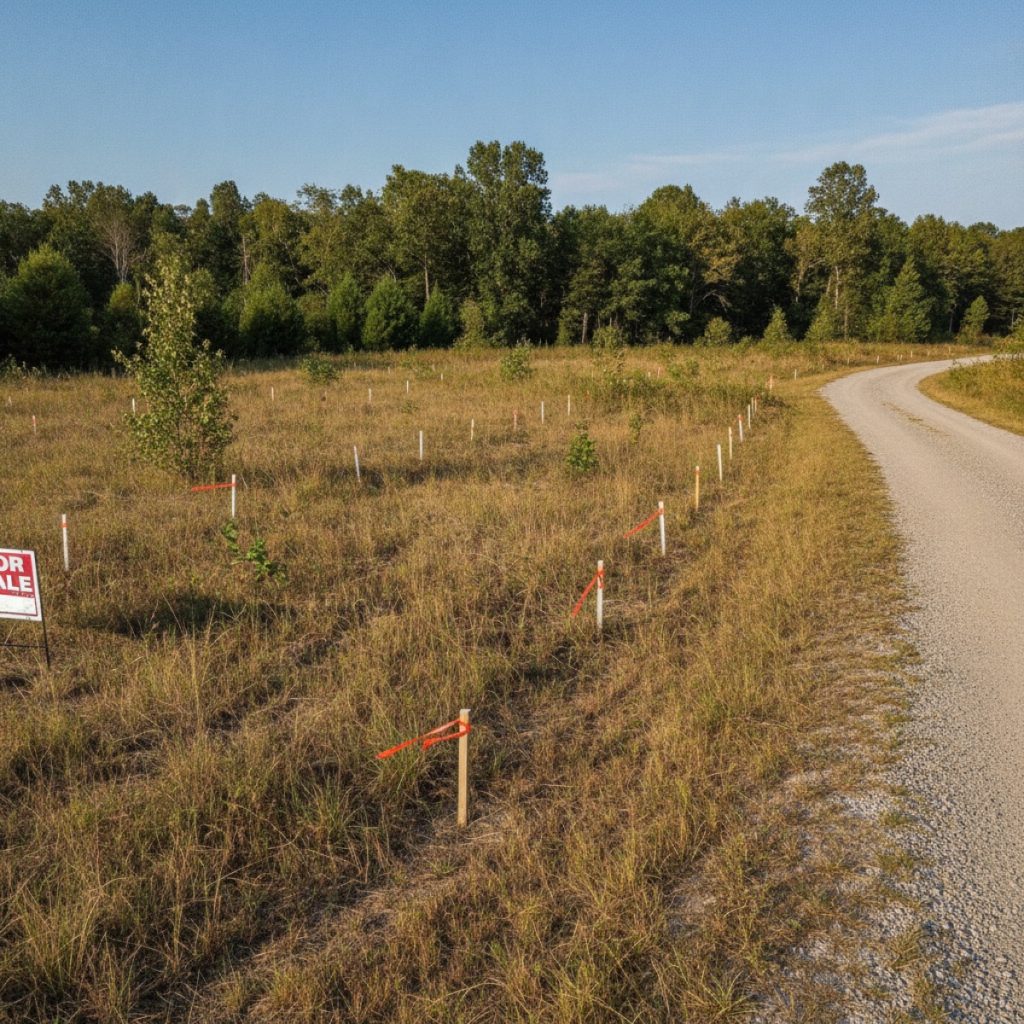
Quick answer: The cost to drill a well on land is rarely just the drilling bill. On a build-ready lot with favorable geology, the borehole and basic well construction may cost roughly $5,000 to $15,000. Deep rock, difficult access, extensive casing, or a dry first hole can push the well itself far beyond that range.
For vacant land, a more realistic all-in planning budget is often $12,000 to $30,000 or more before water reaches the future house. Remote lots, deep aquifers, long electrical and plumbing runs, water treatment, or major access work can take the total above $40,000.
Why the gap? A drilling quote may exclude clearing, mobilization, permits, the pump, pressure tank, power, trenching, testing, treatment, and the pipe to the building. If you budget only for the hole, those omitted items can leave you 40% to 60% short of the amount required for a working household water system.
The full cost stack
The following figures are broad 2026 planning ranges in U.S. dollars. Canadian buyers should use the list to obtain local quotations in Canadian dollars rather than converting these figures and treating the result as a bid. Labor markets, geology, regulations, frost depth, fuel costs, and equipment availability vary too much for a reliable cross-border conversion.
| Cost item | Broad planning range | What changes the price |
|---|---|---|
| Desktop site evaluation and well-log review | $0–$500 | Often included by a local driller; separate research or a site visit costs more |
| Hydrogeologist or geophysical investigation | $1,000–$5,000+ | Site complexity, mapping, field methods, report requirements |
| Clearing and drill-rig access | $500–$7,500+ | Trees, slope, mud, culverts, temporary road, restoration |
| Permit, application, and inspection | $0–$2,000+ | State, county, health unit, municipality, or groundwater district rules |
| Rig mobilization | $500–$2,500+ | Travel distance, permits for heavy equipment, crew lodging, repeat visits |
| Drilling | $25–$65+ per foot | Depth, ground conditions, drilling method, hole diameter, local market |
| Casing | $15–$40+ per foot | Steel versus approved plastic, diameter, required casing depth |
| Grouting and sanitary seal | $500–$2,500+ | Annular space, seal depth, grout volume, placement method |
| Well screen and filter pack | $500–$3,000+ | Needed primarily in sand and gravel formations; screen material and length matter |
| Development and yield testing | $500–$2,500+ | Pumping-test duration, disposal of water, difficult sediment removal |
| Pump, drop pipe, wire, and controls | $2,000–$7,000+ | Pumping water level, flow requirement, pump horsepower, installation depth |
| Pressure tank and switch | $500–$2,000+ | Tank capacity, controls, installation location |
| Pitless adapter and wellhead hardware | $500–$1,500+ | Frost depth, casing size, local construction requirements |
| Electrical service to the well | $1,500–$5,000+ | Distance, trenching, panel capacity, wire size, road crossings |
| Initial water testing | $150–$1,000+ | Required test panel, laboratory, sampling and transport |
| Water line to the future house | $1,500–$6,000+ | Distance, frost depth, terrain, sleeve and road crossings |
| Cap, drainage, protection, and site finish | $200–$1,500+ | Vermin-proof cap, grading, bollards, cleanup, landscaping repair |
Ask whether sales tax, disposal of drill cuttings, disinfection, a completion report, and an initial water sample are included. “Complete well” means different things to different contractors.
Site evaluation and hydrogeology
A useful evaluation begins with the future house, septic system, property lines, roads, drainage, livestock areas, fuel storage, and any known contamination sources. The well must fit into that plan while meeting required separation distances. On vacant land, choosing the house and septic locations without reserving a legal, accessible well site can create an expensive conflict later.
The driller should also review nearby well-completion records—called well logs in everyday conversation. These commonly show total depth, casing depth, materials encountered, static water level, pump-test yield, and construction details. The U.S. Geological Survey’s National Water-Well Database compiles records from participating state databases. Provinces maintain their own systems; Ontario, for example, provides an online Well Record Map.
A driller may review this information as part of preparing an estimate. A hydrogeologist becomes more valuable when the property is unusually large, the local geology is poorly documented, nearby yields are marginal, contamination is suspected, or a planning authority requires a professional report.
How the ground changes the work
- Competent bedrock: Water usually enters through fractures rather than open pores. Drilling may require specialized bits and substantial depth before a productive fracture is found. The open rock portion may not need full-length casing, depending on local rules and rock stability.
- Sand and gravel: These formations can produce excellent wells, but loose material must be controlled. The well may require casing, a properly selected screen, and a filter pack that admits water while limiting sand.
- Clay and mixed deposits: Clay can swell, smear, restrict water movement, or contribute to unstable drilling conditions. Alternating clay, sand, cobbles, and boulders can make both progress and material requirements unpredictable.
Hard rock is not automatically the most expensive condition per foot, and sand is not automatically the least expensive. A rock well may be deep but use less casing. A shallower sand well may require casing and screen for nearly its entire depth. Local experience matters more than a nationwide rule of thumb.
Access and clearing: can the rig reach the well site?
A residential drill rig is heavy, tall, and much less maneuverable than a pickup truck. It needs a firm route, working space around the borehole, and vertical clearance from trees and overhead power lines. Supporting water trucks, compressors, casing deliveries, and service vehicles may also need access.
Walk the proposed route with the driller before accepting the estimate. Discuss:
- Road width, turning radius, grades, ditches, culverts, bridges, and soft shoulders
- Trees and limbs that must be removed
- Whether the ground can support heavy equipment after rain or during spring thaw
- Space for casing, drill rods, cuttings, and discharged test water
- Repair of ruts, fences, gates, drainage, and disturbed soil
- Future access for pulling and replacing the pump
A temporary road can mean geotextile fabric, many loads of aggregate, culvert work, or excavation—not merely clearing brush. If access crosses another property, obtain a written easement before relying on it.
Season and remoteness
Frozen ground may improve access on some northern properties, but winter also brings snow removal, shorter working days, frozen water lines, and difficult concrete or grout conditions. In wet seasons, a site that looked firm during a summer showing may become inaccessible.
Remote lots may carry charges for travel, crew time, fuel delivery, lodging, and repeat mobilization. If the pump installer, electrician, and plumber cannot complete their work on the same trip, the travel cost repeats.
Permits and regulatory costs
Private-well rules are local. In the United States, requirements may come from a state agency, county health department, municipality, tribal authority, or groundwater conservation district. In Canada, provincial or territorial well rules may be supplemented by municipal building, conservation, and public-health requirements.
Some jurisdictions require a construction permit before drilling. Others rely mainly on contractor licensing and a completion report filed after construction. Permit fees illustrate the geographic spread: Loudoun County, Virginia lists a private well-construction fee of a few hundred dollars, while San Diego County’s 2025–2026 domestic-well application fee exceeded $1,500. Certain Texas groundwater districts separately require well registration or a permit.
Confirm all of the following with the authority having jurisdiction:
- Whether the driller must hold a current U.S. license or Canadian provincial licence
- Who applies for and pays for the construction permit
- Required well-to-septic, property-line, building, roadway, and waterbody setbacks
- Whether a groundwater district, conservation authority, or environmental review applies
- Required yield tests, laboratory tests, inspections, and completion records
- Whether public-water connection is mandatory when a main is available
A routine permit may take days or several weeks once a complete plan is submitted. Wetlands, floodplains, coastal areas, protected aquifers, difficult septic layouts, or groundwater-allocation reviews can take longer. Treat the drilling date as tentative until the approving authority and contractor say the required paperwork is complete.
Depth uncertainty is the biggest variable
Aquifers are not underground lakes with flat, predictable roofs. In sand and gravel, productive layers can thin or disappear over short distances. In bedrock, one property may intersect a productive fracture while the next hole encounters tight rock.
Nearby well logs are still valuable. Ten or twenty relevant records can show a likely depth band, casing pattern, rock type, and range of reported yields. They cannot guarantee what will happen at one drilling point. Older records may also contain approximate locations, missing values, short pumping tests, or results from wells built for a different use.
An experienced local driller should be able to explain:
- The median and deeper-end depths in the immediate area
- The expected drilling method and casing depth
- What household yield the contractor considers acceptable
- When drilling would stop for a decision
- Whether low-yield storage or well stimulation is commonly used locally
What happens if the first hole is dry?
Read this section of the contract carefully. In many contracts, the owner owes the drilling charge for every foot completed even if the hole does not produce enough water. The owner may also owe casing charges, mobilization, and the regulated cost of sealing or abandoning the unsuccessful hole.
A second attempt can therefore repeat much of the first-hole expense. Clarify in writing:
- How “dry” or “insufficient yield” is defined
- Who decides whether to deepen, test, stimulate, or stop
- The price per additional foot
- The charge to seal an unsuccessful hole
- Whether a second location carries another mobilization fee
- Whether installed casing can be recovered or remains chargeable
A useful land-purchase budget includes both an expected-depth amount and a deeper-well contingency. In an area with a meaningful dry-hole history, it should also acknowledge that a second bore may be required.
Pump, tank, and electrical work
The well is a source of water; it does not deliver pressurized water to the house by itself. Most drilled household wells use a submersible pump, drop pipe, electrical cable, controls, a pressure tank, and a buried service line.
Pump sizing depends on the pumping water level—the water level while the pump is operating—not merely the well’s total depth. The installer must also account for elevation to the house, desired water pressure, pipe friction, household demand, and the sustainable yield of the well. A deeper lift or greater pressure requirement generally means a larger pump, heavier wire, and higher equipment cost.
Conventional versus constant pressure
A conventional system uses a pressure switch and a tank to reduce pump starts. Household pressure moves between the switch’s lower and upper settings. It is widely serviceable and usually costs less than a variable-speed system.
A constant-pressure system varies pump speed to hold pressure within a narrower range as demand changes. It can provide steadier shower and irrigation pressure and may use a smaller pressure tank. The controller and compatible pump increase the initial price, and electronic controls add another component that may eventually need service.
Neither design can overcome an inadequate well yield. If the household draws water faster than the aquifer replenishes the well, the design may require a storage tank and a separate booster pump.
Power on vacant or off-grid land
A long run from the future electrical panel can become a major cost because voltage drop may require larger wire. Trenching depth, conduit, rock excavation, road crossings, and the eventual panel location all matter. Coordinate the well, power, house, and septic layouts before trenches are opened.
Solar pumping is practical in some off-grid situations, but it must be engineered around well yield, pumping lift, daily demand, seasonal sunlight, and storage. A typical system may include photovoltaic panels, a controller, a compatible pump, and a large water-storage tank. Household peak demand is often handled through stored water rather than expecting the solar pump to match every faucet in real time.
Water testing and treatment
Many building and health authorities require acceptable water-test results before approving a new private water supply or issuing a certificate of occupancy. That requirement is not universal, so confirm the exact local test panel and sampling procedure before drilling. Some authorities require a trained sampler or a sample collected from completed indoor plumbing rather than directly from the wellhead.
At a minimum, initial testing commonly includes total coliform bacteria, E. coli, nitrate or nitrate/nitrite, pH, and general mineral indicators. Depending on local geology and nearby land uses, the health authority may also recommend arsenic, uranium, radium, manganese, fluoride, lead, pesticides, petroleum compounds, volatile organic compounds, or other contaminants.
Clear-looking water is not proof of safety. Many health-related contaminants have no noticeable taste, smell, or color. Use an accredited laboratory and base treatment on the actual laboratory results.
Budgeting for treatment
| Possible issue | Possible equipment | Broad installed allowance |
|---|---|---|
| Sediment | Cartridge, spin-down, or backwashing filter | $300–$2,000+ |
| Hardness | Ion-exchange water softener | $1,000–$3,500+ |
| Iron or manganese | Oxidation and filtration system | $1,500–$5,000+ |
| Microbial risk | Ultraviolet disinfection with suitable pretreatment | $800–$2,500+ |
| Arsenic, nitrate, salt, or complex chemistry | Contaminant-specific media or reverse osmosis | $1,000–$10,000+ |
These are contingency allowances, not treatment recommendations. Some contaminants are best managed at one drinking-water tap; others require whole-house treatment. Equipment also brings filter, salt, lamp, media, wastewater, and testing costs.
Ongoing costs people forget
A private well replaces a water bill with ownership of the entire supply system. Long-term expenses include:
- Electricity: Consumption depends on gallons used, pumping lift, pump efficiency, pressure, and local electricity rates.
- Water testing: The CDC recommends U.S. owners test at least annually for total coliform bacteria, nitrate, total dissolved solids, and pH, plus locally relevant contaminants. Health Canada recommends microbial testing at least every six months and general water-quality testing every two years, subject to provincial or local advice.
- Pump and tank service: Pumps, pressure tanks, switches, controllers, wire, and buried piping do not last indefinitely. Depth and access strongly affect replacement cost.
- Treatment maintenance: Filters, ultraviolet lamps, salt, media, membranes, and follow-up laboratory tests are recurring expenses.
- Well rehabilitation: Mineral scale, biological growth, corrosion, and sand can reduce performance. Rehabilitation may involve cleaning, brushing, surging, or other work performed by a qualified professional.
- Emergency water: A private well usually stops supplying water during a power failure unless the property has generator capacity, stored water, or another backup.
Keep the completion report, pump model, pump setting, electrical information, yield-test results, treatment records, and laboratory reports together. Those records reduce guesswork when the system needs service.
When to walk away from the land
No single deep or low-yield neighboring well automatically makes a property unsuitable. A pattern of unfavorable evidence deserves more weight. Pause or reconsider the purchase when you find:
- Several nearby domestic wells that are unusually deep for the region
- Repeated low-yield, dry-hole, deepening, or replacement records
- Documented saltwater intrusion or naturally elevated arsenic, uranium, radium, nitrate, or other contaminants
- A nearby landfill, mine, industrial site, leaking fuel site, intensive livestock operation, or known contamination plume
- No location that satisfies well, septic, building, property-line, and waterbody setbacks
- Access that requires a major road, bridge, steep-slope work, or an easement the seller cannot provide
- A groundwater district that restricts new wells or the intended volume of use
- A requirement to connect to public water that makes the private-well plan irrelevant
The costliest approach is hoping that favorable water will appear after closing. Where evidence is marginal, make the purchase conditional on the permits, records, professional review, or test well that your real-estate adviser and local authority consider appropriate.
Shared well or municipal connection
A shared well can divide capital costs, but it also ties the property’s water supply to other owners. A durable agreement should address ownership, legal access, electricity, permitted users, capacity, testing, repairs, treatment, unpaid bills, emergencies, future subdivision, and transfer to new owners. Mortgage and insurance requirements should be checked before relying on this arrangement.
If municipal water is nearby, obtain a written estimate covering the connection charge, capacity or development fees, meter, road opening, extension of the main, private service pipe, easements, and restoration. “Water at the road” does not mean the connection is inexpensive or currently available.
Vacant-land well budget worksheet
Use the final column for written local quotations. Keep the deeper-well and treatment contingencies separate so they remain visible.
| Budget line | Planning allowance | Your quoted amount |
|---|---|---|
| Records review and site evaluation | $0–$5,000+ | |
| Clearing and access | $500–$7,500+ | |
| Permit, review, and inspection | $0–$2,000+ | |
| Mobilization | $500–$2,500+ | |
| Expected-depth drilling | Expected feet × quoted rate | |
| Casing, grout, screen, and development | Written contractor allowance | |
| Pump, controls, tank, and pitless adapter | $3,000–$10,000+ | |
| Electrical connection | $1,500–$5,000+ | |
| Buried water service to house | $1,500–$6,000+ | |
| Testing and disinfection | $150–$1,000+ | |
| Treatment contingency | $0–$10,000+ | |
| Site repair and protection | $500–$3,000+ | |
| Deeper-well contingency | Extra feet × drilling, casing, and pump impact | |
| Dry-hole or second-hole exposure | Based on written contract terms |
Sources and methodology
Cost figures in this article are editorial planning ranges assembled from 2025–2026 contractor pricing guides, published permit schedules, and typical component pricing. They are not national averages or project quotations. Costs were intentionally shown as wide ranges because local geology, depth, access, construction rules, labor, and contract scope have more influence than a single nationwide number.
Construction and regulatory guidance was checked against the U.S. Environmental Protection Agency’s private-well guidance, the USGS National Water-Well Database, and the National Ground Water Association’s Having a Well Drilled consumer guidance.
Water-testing recommendations were checked against the U.S. Centers for Disease Control and Prevention and Health Canada’s private-well testing guidance. Canadian contractor-licensing and well-record examples were checked against Ontario’s current licensed well-contractor directory and well-record guidance. Local authorities and the written contractor agreement remain the controlling sources for an individual property.
Related Guides
- Well Inspection Cost
- Well Pump Replacement Cost
- How Deep Should a Well Be?
- How to Choose a Well Driller
- Do You Need a Permit to Drill a Well?
Browse all Drilling & Pump Costs guides →

Author: Well Drilling Guide Editorial Team
The Well Drilling Guide editorial team researches and writes our guides on water-well drilling, pumps, and well water for homeowners across the US and Canada. We translate current cost data, NGWA and state well-construction standards, and EPA and CDC guidance into clear, practical answers. What we stand for: honest, independent help. Every price and claim is researched and fact-checked against multiple 2026 sources — never guessed, never borrowed from a single advertiser. We answer to homeowners, not to the companies we write about, because our only goal is to help you make a confident, well-informed decision about your water.
Find verified, local contractors who handle new installations, pump service, and water quality testing — in your area.